Season
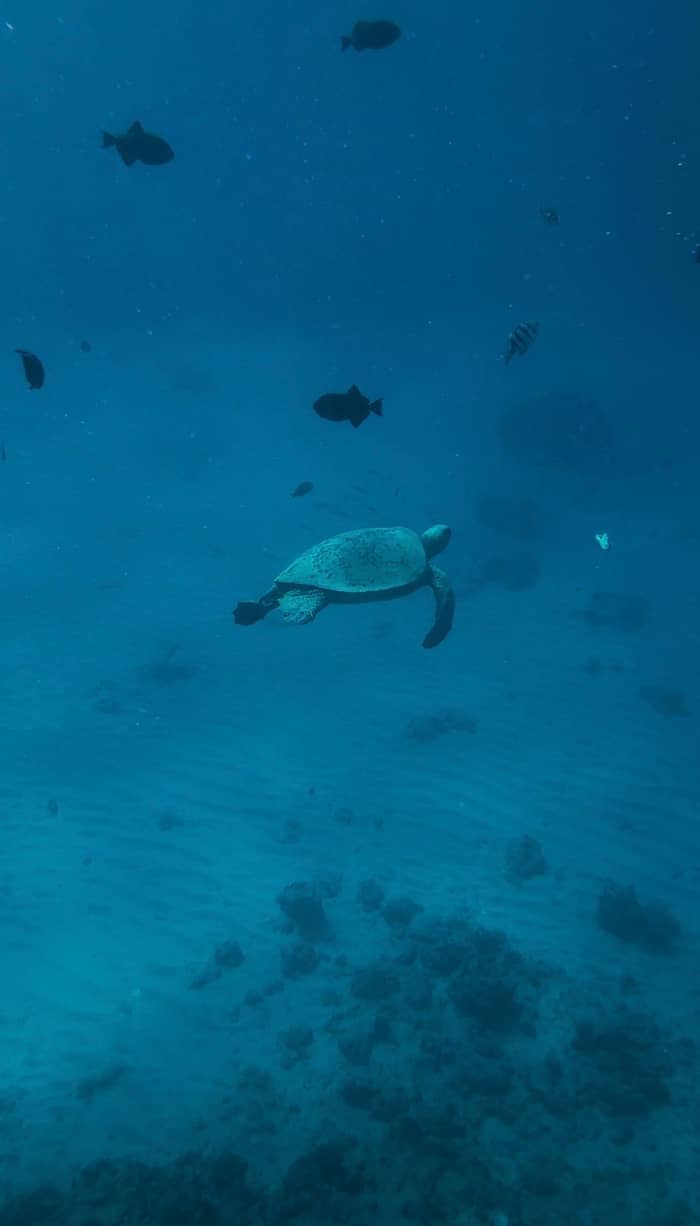
Winter with whales
November to April
See the cruiseChoice helper
Fast answer
The best time to snorkel Turtle Canyon has no official month, so pick by whale season, south swell and the boat slot that suits you.
Timing in brief
Two taps to a plan
Answer two questions and the matching trip appears with its starting price.
Your match
from $89
A catamaran listing shows a trip from 8 AM to 10:30 AM, the earliest of its three daily slots.
Your match
from $89
The same catamaran listing shows a trip from 2 PM to 4:30 PM as its last slot of the day.
Your match
from $85
A 2 hour Turtle Canyon boat tour with snacks and drinks, and free cancellation up to 24 hours ahead.
Your match
from $89
A 2 hour cruise whose description says spinner dolphins and humpback whales may be spotted in the winter months.
Your match
from $138
A 3 hour Turtle Canyon snorkeling tour that starts at a dive shop and asks every snorkeler to know how to swim.
No official page counts turtles by month, so this guide uses what is documented: the Waikiki climate record, whale season, the state's surf seasons, the boat slots and how a listing treats rough water.
Editorial team, turtlesnorkelwaikiki.com · Updated November 24, 2026 · A 7 min read
Quick look
Most readers want to know which month has the most turtles, and the answer begins with what the official pages leave out. The state's aquatic resources agency describes the Hawaiian green sea turtle as a distinct population that does not leave the Hawaiian archipelago chain.1 It also calls nearshore coral reefs key foraging habitat for the species.4 Neither page counts turtles at a Waikiki reef month by month, and we will not invent a count.
What the agencies do document is nesting, which moves some adults away from the main islands for a while. The state agency says females generally nest only every 2 to 5 years and undertake reproductive migrations,5 and that an estimated 96 percent of the population nests at French Frigate Shoals.6 It gives the nesting season as late April through late October, while a NOAA story gives mid-April to September, sometimes into December.7,8 The two sources differ, so read the range as approximate.
The practical reading is that turtle presence is not a reason to choose one season over another. Most of the year-to-year difference you will feel comes from the sea, the light and the schedule, which are documented. The sections below take them in turn, and the checklist near the end turns them into a booking decision for the Turtle Canyons cruise this site is built around, with the climate table as the reference.
Month by month
| Month | Daily high | Daily low | Rain | Wet days |
|---|---|---|---|---|
| January | 26.8 °C2 | 18.4 °C2 | 61 mm2 | 4 days2 |
| February | 27.1 °C2 | 18.8 °C2 | 48 mm2 | 3 days2 |
| March | 27.5 °C2 | 19.5 °C2 | 81 mm2 | 5 days2 |
| April | 28.5 °C2 | 20.7 °C2 | 30 mm2 | 3 days2 |
| May | 29.3 °C2 | 21.3 °C2 | 27 mm2 | 3 days2 |
| June | 30.3 °C2 | 22.6 °C2 | 15 mm2 | 1 days2 |
| July | 30.7 °C2 | 23.2 °C2 | 17 mm2 | 2 days2 |
| August | 31.2 °C2 | 23.5 °C2 | 19 mm2 | 2 days2 |
| September | 31.1 °C2 | 23.1 °C2 | 26 mm2 | 2 days2 |
| October | 30.3 °C2 | 22.6 °C2 | 50 mm2 | 3 days2 |
| November | 28.6 °C2 | 21.5 °C2 | 67 mm2 | 4 days2 |
| December | 27.4 °C2 | 20 °C2 | 76 mm2 | 4 days2 |
These are NOAA averages (1991 to 2020) for the Waikiki 717.2 station, 1.4 km from the dock; a wet day here counts rainfall of 2.5 mm or more.2
The record below comes from the NOAA station Waikiki 717.2, which stands 1.4 km from the boat dock, and covers the averages for 1991 to 2020. Air temperature hardly changes: daily highs average 26.8 °C in January and 31.2 °C in August, with lows of 18.4 °C and 23.5 °C in those same months.2,2 A snorkeler in the water feels the sea, not the air, but the air tells you how a wet swimsuit will feel on the deck afterward.
Rain is the second variable. The station's rain peaks in March at 81 mm, spread over 5 wetter days, and bottoms out in June at 15 mm, with just 1 such day.2,2 Rain therefore matters less to a boat day than the state of the sea, and the decision to run a trip rests on sea state and safety, which the last section covers. Pack a light shell for the ride and keep the phone in a dry bag.
Daylight is the third variable. Mid-December has 10.8 hours of daylight and mid-June has 13.4, a gap that shapes how late a trip can run.2,2 That matters for the late slot: an afternoon departure in midwinter has less light behind it than the same departure in summer. The station records air only, so it says nothing about visibility under the surface, and the table and chart that follow are an air guide only.
Air temperature and light
Displayed: sun-free hours in mid-month, and days with a minimum of 2.5 mm of precipitation. NOAA, station Waikiki 717.2, a NOAA station 1.4 km from Kewalo Basin, 1991 to 2020.2
Winter brings humpback whales. The sanctuary says whales are visible from shore and at sea from November through April,3 and the site tour's own description says spinner dolphins and humpback whales may be spotted along the coast in the winter months. Another Waikiki listing gives the whale season as December to March, a shorter window than the sanctuary's. A turtle snorkel in winter therefore comes with a chance of a second kind of wildlife.
Whales change how boats behave. Federal law requires vessels to stay 100 yards from humpback whales in Hawaii, so a captain has to keep that distance when one surfaces.12 Expect the occasional detour, enjoy it and do not count it against the trip, because the whales are a bonus on top of the reef. The turtle reef does not move, and your time in the water is a fixed block on the itinerary.
Winter is also the season of big surf, but not on this coast. The state's ocean safety page puts the biggest winter surf on the north and west shores, where it is extremely high at many beaches.9 Waikiki sits on the south coast, so the North Shore is where the winter swell lands, and the same state page adds that the temperature of the coastal ocean barely shifts from season to season.13 Check the surf forecast anyway on the day you book.
Choosing your season
Season
November to April
See the cruise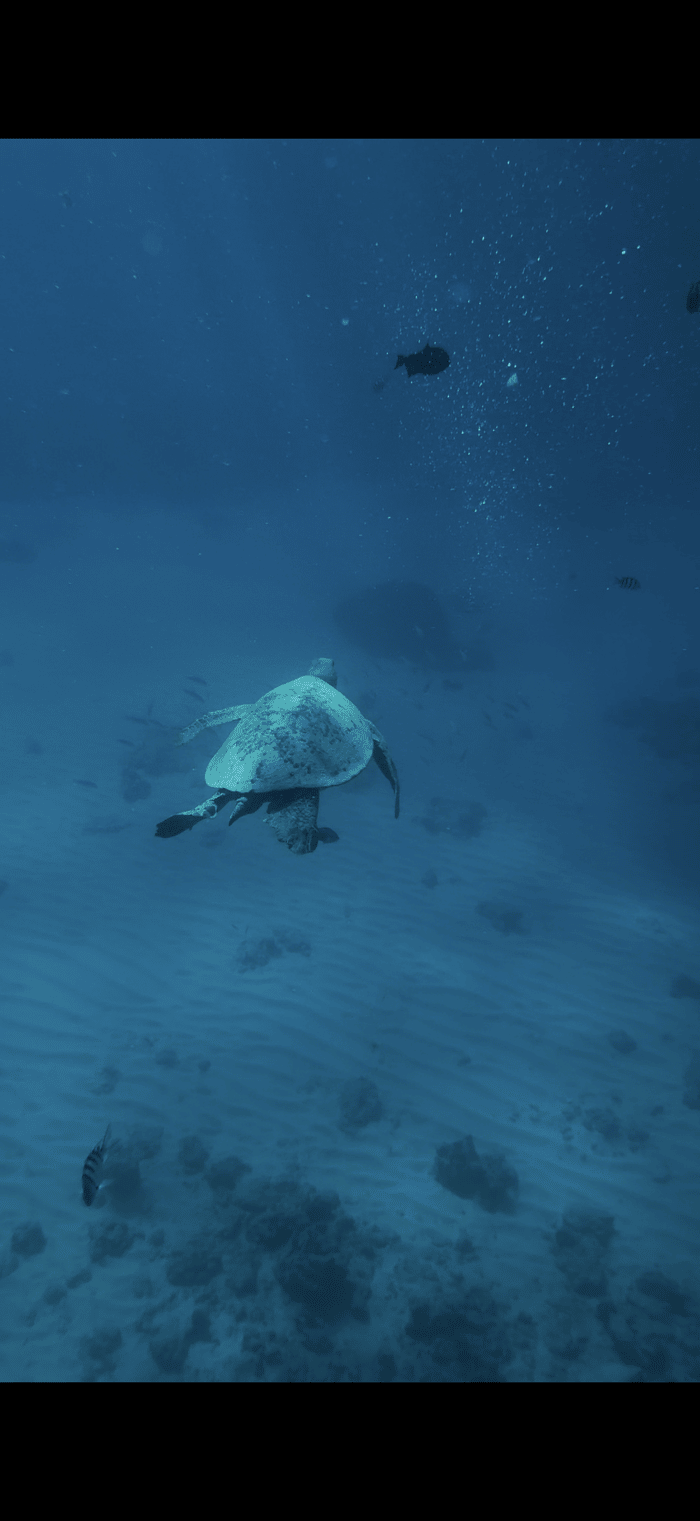
Season
June to August
See the cruise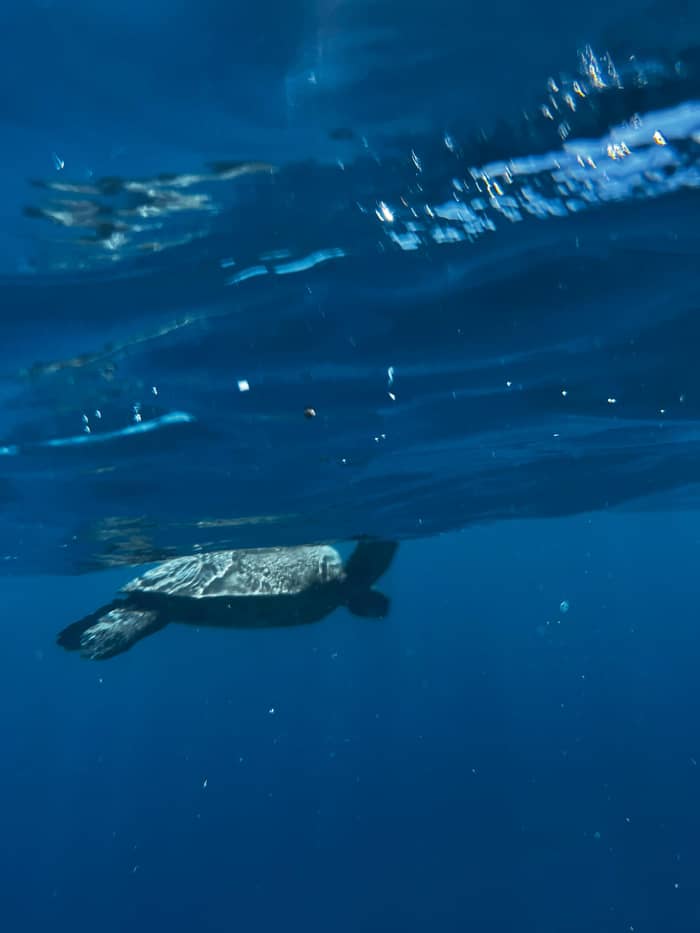
Season
The months between
See the cruiseSummer is the season of calm on most coasts. The state's page says summer typically means calmer waters on all beaches, with one exception that matters here: south-facing shores can see larger swells, which winter storms in the southern hemisphere send north.10 Waikiki faces south, so a summer boat day is generally pleasant but not always flat, and the crew will tell you when a swell is running and where the day's snorkel stop will be.
The climate record agrees that summer is the dry end of the year. June averages 15 mm of rain and August has the warmest average daily high at 31.2 °C.2,2 That makes the deck hot, so a hat and a rash guard matter more than a jacket. Water temperature is the quiet constant: the state says the coastal ocean barely changes in temperature through the year,13 which turns the choice of month into a question of sky and swell more than of how cold the water feels.
The state also offers a rule worth taking to heart. Wave conditions are localized, so a spot that is rough can have a calmer neighbor in a different part of the island.11 On the day of a swell the operator, not the visitor, chooses the reef, which is one reason to book a guided boat and not a shore entry with no one to read the water for you. The sentence is the state's, and it applies to a snorkeler as much as to a swimmer.
Compare the slots
Choose how many are coming and set these trips side by side, each at its listed starting price.
Weigh up 3 options
Choose how many are coming and set these trips side by side, each at its listed starting price.
≈
View≈
View≈
ViewConverted at the ECB reference rate, from-prices as listed by GetYourGuide. The precise amount is shown when you book.
A year off Waikiki
Winter
Whales are visible from shore and at sea between November and April.3
Late winter
Extremely high surf is expected at many north and west shore beaches in winter.9
Spring
April has 30 mm of rain, May 27 mm and June 15 mm at the Waikiki station.2,2,2
Summer
South-facing shores can see larger swells that winter storms in the southern hemisphere send north.10
Autumn
October has 50 mm and November 67 mm at the same station.2,2
The best time of day to snorkel Turtle Canyon is a question that no official page answers, because no agency measures turtle behavior hour by hour. What a listing can tell you is when boats leave. One catamaran listing shows trips at 8 AM to 10:30 AM, 11 AM to 1:30 PM and 2 PM to 4:30 PM. Start times for the site tour show only once you check availability, so confirm yours when you book.
Use the hour to manage comfort and logistics rather than for turtles, because nothing official ties turtle sightings to a time of day. A morning start frees the afternoon for the beach, and a late slot lets you sleep in and gives you a long lunch first. Both end with the same 15 minute cruise back along Waikiki Beach. In midwinter, with 10.8 hours of daylight at mid-month, an afternoon trip has the least light behind it of the year.2
Reviews carry the only first-hand note on crowds that we can use. Among the latest English reviews of the cruise, one guest saw no turtles and noted plenty of other boats and groups out there, and another said visibility was not great that day. That is a reminder that timing helps comfort and sea state, not the turtles' attendance, and that any slot can be a quiet one or a busy one.
Video
blueplanetsurf on YouTube · The video only starts loading on your tap.
Wave conditions are localized, so if a beach seems too dangerous for your skill level, you can often find calmer conditions at another beach in a different part of the island.
Before you book
Anyone asking about Turtle Canyon snorkel conditions today will find that the honest answer is not a forecast but a policy. The site tour offers free cancellation up to 24 hours in advance for a full refund and lets you reserve now and pay later. That clock matters more than any website: if the sea is rough, you want the freedom to move your date before the window closes, so treat that window as your real forecast.
Listings state the weather rule in their own words. One boat tour says weather and water conditions can affect it, another says tours operate weather permitting, and a third says activities are subject to change due to weather or safety concerns. A dolphin and turtle listing states that cancellations due to weather are fully refundable. A beginner shore lesson says it takes place rain or shine.
So how does an operator post a sea-state cancellation? None of the records we read describes the channel, so the practical step is to ask the operator, by phone or message, once the evening before and once on the morning itself. Meanwhile the state's ocean safety site carries timely conditions for lifeguarded beaches, which gives you a second opinion on the surf before you leave the hotel.14
FAQ
The turtle population stays within the Hawaiian islands, and no page we found counts turtles by month, so choose on climate, whales and swell.1
Boats leave at set slots, one listing showing 8 AM, 11 AM and 2 PM, and the site tour shows start times once you check availability.
The sanctuary says whales can be seen from November through April, and the site tour mentions winter whales and dolphins.3
One listing says tours operate weather permitting, and the wettest month in the record has 81 mm of rain on 5 days.2
The January average daily low is 18.4 °C at the NOAA station 1.4 km from the dock.2
The site tour offers free cancellation up to 24 hours in advance for a full refund, so decide the day before.
The state says south-facing shores can see larger swells, which winter storms in the southern hemisphere send north.10
Sources
Planning a turtle snorkel off Waikiki? Ask a real person here.